


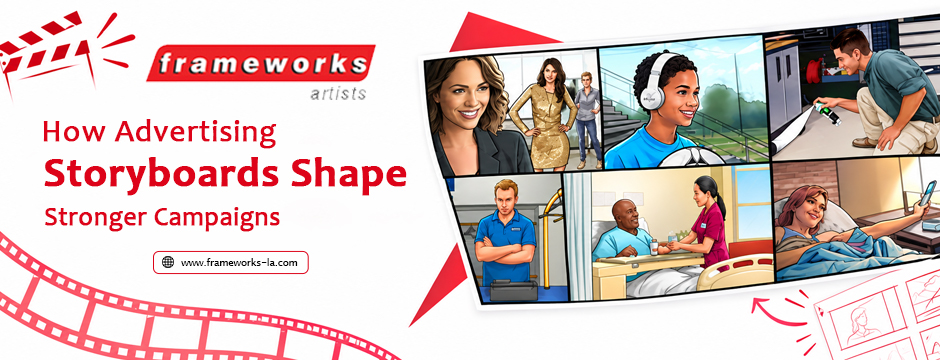
Storyboards provide a visual framework for turning an advertising concept into a sequence of scenes before production begins. A written script can explain dialogue, actions, and ideas, but visual planning helps creative teams understand how those elements will appear on screen. From camera framing and character movement to product placement and scene transitions, advertising storyboards bring greater clarity to the proposed advertisement.
The blog discusses how advertising storyboards support campaign planning, improve creative communication, guide production decisions, and help teams turn abstract concepts into cohesive visual narratives.
Turning Creative Concepts Into Visual Sequences
Advertising campaigns often begin with a creative brief, script, mood board, or verbal concept. Although these materials establish the foundation, they may not fully communicate how the final commercial should look and progress from one shot to another. Storyboarding transforms those ideas into sequential visual frames that can be reviewed before production starts.
Each frame can represent an important moment within the advertisement. The sequence can show where characters are positioned, how products appear, what the audience sees, and how one shot connects with the next. This visual approach allows creative teams to examine the campaign as a complete narrative rather than viewing individual ideas separately.
Establishing Camera Direction Before Production Begins
Camera direction plays an important role in advertising because framing can influence how viewers perceive a product, character, setting, or action. Storyboards provide an opportunity to consider shot composition before cameras are placed on location.
The artwork can illustrate wide shots, close-ups, over-the-shoulder views, product-focused compositions, and other framing choices. It can also indicate movement and transitions that may be difficult to explain through written instructions alone. By visualising these decisions early, directors and production teams can develop a clearer understanding of the intended sequence.
Choosing Artists For Distinct Campaign Visuals
Every advertising campaign has its own visual language. A luxury product commercial may require sophisticated compositions and detailed environments, while a fast-paced campaign may depend more heavily on action, expressions, and movement. Selecting an artist whose approach complements the campaign can therefore influence how effectively the concept is communicated.
An artist storyboard can translate a director’s vision into images while maintaining the required tone, composition, and storytelling style. The artist needs to understand more than drawing techniques. They must interpret creative direction, recognise important visual moments, and organise those moments into a sequence that production teams can understand.
Creating Clarity Across Creative Production Teams
Advertising production usually involves multiple people working toward the same visual outcome. Directors, producers, creative directors, cinematographers, designers, clients, and production departments may all interpret a written concept differently.
A storyboard creates a shared visual reference. Instead of relying entirely on verbal descriptions, teams can review specific frames and discuss changes based on what they see. This can make creative conversations more focused and help identify potential issues before filming begins.
Visual references can also make client presentations more engaging. When clients can see how a proposed advertisement may unfold, they can provide more informed feedback during the development stage.
Refining Product Placement And Brand Visibility
Advertising requires careful attention to how a product or brand appears within a scene. A storyboard can help determine when the product enters the frame, how prominently it is displayed, and how surrounding elements support the message.
For product-focused campaigns, visual planning can be especially valuable. The storyboard may establish the relationship between the product, characters, setting, lighting, and camera position. This gives the creative team an opportunity to consider whether the product receives appropriate visual emphasis before production resources are committed.
Supporting Efficient Pre-Production Planning
Pre-production decisions can influence the efficiency of the entire advertising shoot. Storyboards help teams examine scenes before production and consider how complex sequences should be approached.
An experienced storyboard illustrator can visualise action, environments, character positioning, transitions, and camera perspectives in a way that supports practical planning. This can help production teams understand what needs to be prepared for each sequence.
Storyboards can also reveal moments that may require additional planning, such as complicated movement, multiple characters, specialised environments, or visual effects. Identifying these requirements early gives the team more time to develop an appropriate production approach.
Balancing Detail With Clear Visual Communication
A storyboard does not always need to look like a finished advertisement. Its primary purpose is to communicate the intended visual direction clearly. The appropriate level of detail therefore depends on how the artwork will be used.
Some campaigns may benefit from highly polished colour frames that communicate atmosphere, styling, lighting, and product appearance. Other productions may need black-and-white artwork that focuses on composition, action, framing, and shot progression.
The most effective approach is the one that communicates the information required by the creative and production teams. Excessive detail can sometimes distract from important production information, while insufficient detail may leave significant creative decisions unclear.
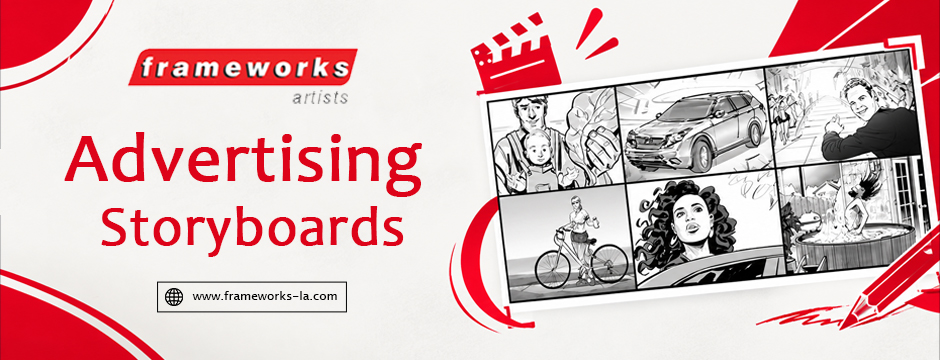
Improving Communication Between Clients And Directors
Creative differences can emerge when a campaign exists only as a written concept. A client may imagine one interpretation while the director or production team visualises another. Storyboards create an opportunity to discuss those differences before filming begins.
When a sequence is represented visually, changes can be considered during the planning stage. A frame can be reviewed for composition, product positioning, character action, or visual continuity, allowing stakeholders to discuss whether the proposed direction meets the campaign objective.
This collaborative process can help establish stronger alignment between creative expectations and production plans.
Visualizing Movement Timing And Scene Transitions
Advertising is often built around carefully timed sequences. A character may move through a location, a product may be revealed gradually, or several shots may need to connect smoothly to deliver the intended message.
Storyboards help map these moments visually. Sequential frames can show how action develops and how the audience moves from one visual moment to another. Although the finished commercial will include motion, sound, editing, and other elements, the storyboard provides a foundation for understanding the visual progression.
This is particularly valuable for commercials where pacing and visual rhythm contribute strongly to the overall creative impact.
Why Professional Storyboard Planning Matters
The value of advertising storyboards extends beyond creating attractive drawings. A successful storyboard needs to communicate the campaign’s creative intention while remaining useful to the people responsible for production.
The artist must understand visual storytelling, composition, camera language, movement, and the requirements of advertising communication. They also need to interpret creative briefs and transform written ideas into images without losing the central message.
When these elements work together, storyboards can help advertising teams move from an abstract idea toward a clearer and more organised production plan.
Conclusion: Creating Stronger Advertising Visuals
Advertising storyboards give creative teams a practical way to visualise campaign ideas before production begins. The team can clarify camera direction, product placement, character movement, scene transitions, pacing, and visual continuity while creating a shared reference for clients, directors, and production departments. By identifying creative and practical considerations earlier, storyboards can contribute to a more organised development process.
For businesses and creative teams seeking experienced visual artists, Frameworks Artists provides access to storyboard and related pre-production artistic talent for advertising and commercial projects. Our range includes colour and black-and-white storyboard artists as well as other visual-development specialists, allowing projects to consider different artistic approaches according to their requirements. So, contact our team to know about this range more.
FAQs
1. What are advertising storyboards used for?
Advertising storyboards are used to visualise an advertisement before production. They can communicate camera angles, composition, product placement, character movement, transitions, and the overall sequence of a campaign.
2. How does an artist storyboard support advertising?
An artist storyboard translates creative direction into sequential visual frames. It helps directors, clients, and production teams understand how scenes may appear and connect before filming begins.
3. What does a storyboard illustrator do?
A storyboard illustrator transforms scripts, briefs, and creative concepts into visual sequences. The work can illustrate composition, movement, framing, environments, characters, products, and other important visual elements.
4. Can advertising storyboards show product placement?
Yes. Advertising storyboards can demonstrate where and how products appear within individual scenes. This allows creative teams to review product visibility, composition, camera positioning, and surrounding visual elements during pre-production.
5. Why is a storyboard illustrator important for campaigns?
A storyboard illustrator helps turn abstract advertising concepts into clear visual plans. This can improve communication among creative and production teams and provide a reference for reviewing scenes before filming.
Tags: Advertising Production, Camera Direction, Commercial Storyboards, Creative Production, Pre-Production Planning, Product Placement, storyboard artists, Visual Storytelling