


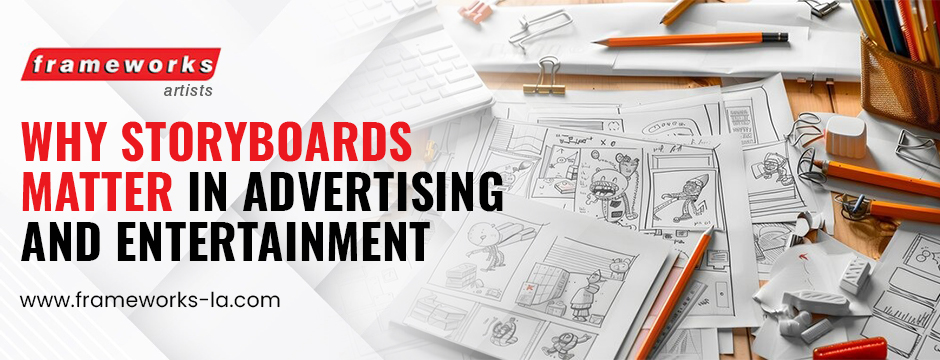
In advertising and entertainment, a strong visual idea is only the beginning. Turning that idea into a finished commercial, film, television production, or branded video requires careful planning, communication, and visual direction. This is where Storyboards become an important part of the creative process. They provide a visual representation of how scenes can unfold, helping creative teams understand the intended sequence before production begins. From camera positioning and character movement to composition and pacing, a well-planned visual sequence can make complicated ideas easier to understand and execute.
Turning Creative Ideas Into Visual Plans
Creative concepts often begin with words. A director may have an idea for a dramatic scene, while an advertising team may imagine a memorable product moment. However, verbal descriptions can be interpreted differently by different members of a production team. Visual planning helps eliminate much of that uncertainty.
A sequence of drawings can demonstrate what a scene is expected to look like from one shot to the next. It can indicate where characters stand, how they interact with their surroundings, and how the camera may move. This gives directors, cinematographers, producers, designers, and clients a common visual reference.
The value becomes even greater when a project involves numerous people working toward the same creative objective. Instead of relying entirely on explanations and discussions, teams can review a visual plan and identify what works before cameras start rolling.
Improving Communication During Preproduction
Preproduction involves many decisions, and small misunderstandings can create expensive problems later. Visual planning provides a practical way to communicate creative intentions before production resources are committed.
A director can use drawings to explain framing and shot progression to the cinematography team. Production designers can better understand the required environments, while performers can gain a clearer sense of their position and movement within a scene. Clients can also see how an advertising concept is expected to translate from an idea into a finished sequence.
This collaborative advantage is especially useful when a project contains complicated action, multiple locations, visual effects, or precise product placements. A visual plan gives everyone something concrete to discuss, revise, and approve.
Helping Advertising Teams Plan More Effectively
Advertising frequently operates under strict deadlines and budgets. A commercial may last only a few seconds, yet those seconds can contain multiple shots, movements, transitions, and visual details. Every frame needs to contribute to the message.
Commercial Storyboards help advertising teams organize these elements before production begins. They can show how a product will be introduced, where an actor will appear, when a particular action will take place, and how the camera will transition between shots.
This preparation can reduce unnecessary experimentation on set. Instead of discovering the visual structure during filming, the team has an established direction to work from. It also allows clients and agencies to review the proposed sequence before production, making it easier to identify changes while they are still relatively simple to make.
For advertising campaigns, this can be particularly valuable because creative decisions often involve both artistic and commercial considerations. The visual sequence must attract attention while communicating the intended message clearly.
Making Visual Storytelling More Precise
Entertainment projects depend heavily on visual storytelling. Whether the production is a short film, feature film, television episode, music video, or branded production, audiences understand stories through a combination of images, movement, sound, dialogue, and editing.
Storyboard Art helps translate the imagined story into a sequence that can be examined before filming. Rather than considering individual shots in isolation, creative teams can look at how those shots work together. This makes it easier to assess pacing, visual continuity, dramatic emphasis, and transitions.
For example, a suspense sequence may require carefully controlled framing and gradual changes in perspective. A fast-paced action sequence may require numerous shots that communicate movement without confusing the viewer. Visual planning allows the creative team to examine these choices before production begins.
It can also help reveal weaknesses. A scene that sounds effective when described verbally may not work as expected when visualized. Identifying such issues early gives the team an opportunity to rethink the sequence without the pressure and expense of a production day.
Supporting Better Budget and Resource Planning
Creative decisions have practical consequences. A particular shot may require additional equipment, a larger crew, a special location, visual effects, props, or additional production time. Without adequate planning, these requirements can emerge unexpectedly.
Visual planning can help production teams identify these needs in advance. By examining each planned shot, producers can begin determining what resources may be necessary. This makes budgeting and scheduling more informed.
Storyboard Artwork can also provide a useful reference when evaluating alternatives. If a proposed shot is too expensive or difficult to produce, the creative team can explore another visual approach before filming. The objective is not necessarily to restrict creativity but to make creativity more achievable within the project’s practical limitations.
Giving Directors Greater Control Over Their Vision
Directors often have a highly specific visual concept in mind. Communicating that concept to an entire production team can be challenging, particularly when scenes are complex.
A professional Storyboard Artist helps translate the director’s vision into visual frames that can be discussed and refined. The drawings do not have to represent the final footage perfectly. Their primary purpose is to communicate the essential visual information required to guide production.
This can include shot size, camera angle, perspective, character placement, movement, staging, and significant environmental elements. Depending on the project’s requirements, the visual approach can be simple and functional or highly detailed and presentation-oriented.
The result is a stronger bridge between imagination and execution. Directors can explore visual possibilities before production while giving their teams a clearer understanding of the intended result.
Encouraging Creative Collaboration
One of the strongest advantages of visual planning with Storyboards is its ability to encourage collaboration. Advertising agencies, production companies, directors, clients, designers, and other creative professionals may approach a project from different perspectives. A shared visual reference helps bring those perspectives together.
Teams can discuss individual frames, suggest changes, compare alternatives, and refine the sequence collectively. This can make creative meetings more productive because discussions are based on something tangible rather than entirely abstract ideas.
It can also help clients participate more confidently in the approval process. Someone who is not familiar with technical production terminology may find it easier to respond to a visual sequence than to a detailed verbal explanation of camera movements and shot transitions.
Reducing Production-Day Uncertainty
Production days can be expensive and tightly scheduled. Locations, crews, equipment, performers, and other resources may only be available for a limited period. When the creative direction is unclear, valuable time can quickly be lost.
A prepared visual sequence gives the team a roadmap. It does not eliminate the need for creative decisions on set, since real-world conditions may require adjustments. Instead, it provides a strong foundation from which the team can adapt.
This is particularly useful for productions involving multiple departments. When everyone understands the planned sequence, transitions between different aspects of production can become more organized. The team can concentrate on achieving the desired result rather than repeatedly determining what needs to happen next.
Creating a Stronger Connection Between Concept and Final Result
A successful production should preserve the central idea that made the project appealing in the first place. Without sufficient planning, an exciting concept can lose its impact during execution.
Visual planning helps maintain continuity between the original concept and the finished production. It allows creative teams to revisit the intended visual direction throughout the production process. When changes are necessary, they can be evaluated against the original purpose of the scene.
This does not mean every frame must be followed rigidly. Production is often unpredictable, and spontaneous creative decisions can produce excellent results. Instead, the visual plan acts as a reference point that helps the team understand what each shot is intended to accomplish.
Why Visual Planning Remains Relevant
Technology continues to change the way advertising and entertainment projects are developed. Digital tools, virtual production, computer-generated imagery, and advanced editing systems have expanded creative possibilities. Yet the fundamental need to communicate visual ideas clearly has not disappeared.
If anything, increasingly complex productions can make visual planning even more valuable. Teams may need to coordinate real environments with digital elements, plan intricate camera movements, or communicate ideas across geographically distributed departments.
The basic principle remains straightforward: the clearer the creative vision is before production, the easier it becomes to make informed decisions during production.
Bring Your Vision to Life with Frameworks Artists
Frameworks Artists delivers professional visual storytelling support for advertising, entertainment, design, and commercial production. Our team provides skilled storyboard artists, comp and concept artists, set sketchers, and production design illustrators for diverse creative requirements. We help transform ideas into clear, compelling visuals that support pitching, planning, and production. Whether you need color or black-and-white storyboards, conceptual artwork, or production illustrations, we offer flexible project-based creative support tailored to your vision, requirements, and schedule.
Conclusion
Storyboards matter in advertising and entertainment because they transform abstract ideas into practical visual plans. They improve communication, support collaboration, assist with budgeting, clarify creative direction, and help production teams prepare for complex scenes before cameras begin rolling. From a short advertisement to an elaborate entertainment project, visual planning provides a valuable connection between imagination and execution.
Storyboards are not simply collections of drawings. They are working tools that help creative professionals examine ideas, identify potential problems, and build a shared understanding of the final vision. When used effectively, they can make the production process more organized while giving creative teams greater confidence in bringing their ideas to life.
Frequently Asked Questions
What are Storyboards?
Storyboards are visual sequences that illustrate planned shots, actions, camera angles, and scene composition before production begins.
Why are Storyboards important in advertising?
They help advertising teams visualize concepts, organize shots, communicate ideas, and identify potential issues before filming.
How do Storyboards help entertainment productions?
They provide directors and production teams with a visual roadmap for planning scenes, camera movements, character actions, and transitions.
Can Storyboards help control production costs?
Yes. They can identify production requirements early, helping teams plan resources, schedules, equipment, locations, and other expenses.
What is Storyboard Artwork used for?
Storyboard Artwork visually represents planned scenes, helping creative teams review and refine sequences before production.
Who creates professional Storyboards?
A professional Storyboard Artist creates visual sequences based on the director’s, agency’s, or client’s creative requirements.
Are Storyboards useful for commercial projects?
Yes. They help teams plan product placement, actors, camera shots, visual transitions, and messaging for advertising campaigns.
Do Storyboards have to be highly detailed?
Not always. Their level of detail depends on the project’s requirements and how much visual information the production team needs.
Can Storyboards improve creative collaboration?
Yes. They give directors, clients, designers, producers, and other team members a shared visual reference for discussing ideas.
How can Frameworks Artists help with Storyboards?
Frameworks Artists provides professional storyboard, comp and concept, set sketching, and production design illustration services for creative projects.
Tags: Concept Artists, Film Production, Storyboard Art, storyboard artists, storyboard artwork, storyboard services, Storyboards, Visual Storytelling