


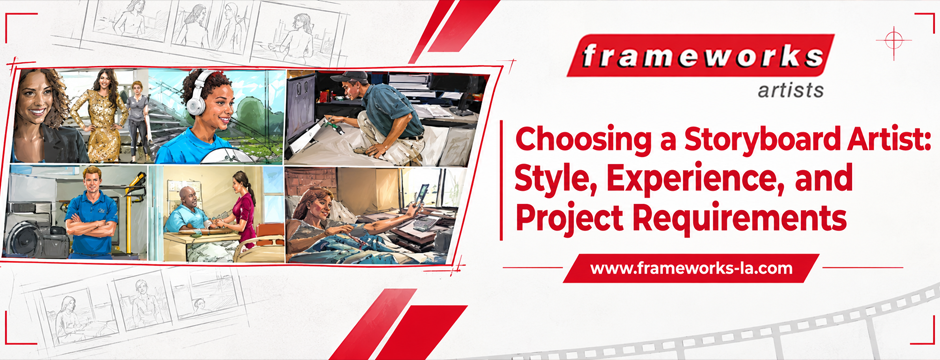
Turning a script, concept, or creative idea into a compelling visual production requires more than a strong screenplay and talented crew. Before cameras begin rolling or animation takes shape, the production needs a clear visual direction. This is where a Storyboard Artist can become an important part of the pre-production process. By translating written descriptions and creative ideas into visual frames, the right professional can help directors, cinematographers, producers, and other members of a production team understand how a scene is intended to unfold.
However, choosing the right artist is not simply about finding someone whose drawings look impressive. Different productions demand different artistic approaches, levels of detail, technical knowledge, and storytelling abilities. Understanding style, experience, and project requirements can make the selection process considerably more effective.
Why the Right Artist Matters
A storyboard serves as a visual plan for a production. It can communicate everything from camera angles and character positions to movement, composition, pacing, and transitions. While a script explains what happens, visual planning helps demonstrate how those events may appear on screen.
Because every project has its own creative language, selecting an artist whose strengths align with the production is essential. A professional who specializes in dramatic live-action sequences may not necessarily be the ideal choice for an animated action sequence. Similarly, an artist experienced in advertising may approach a short commercial differently from someone accustomed to feature-length filmmaking.
The goal is to find someone who understands the project’s creative requirements and can translate them into clear, useful visuals.
Start With the Project’s Visual Style
One of the first factors to evaluate is artistic style. Some projects require highly detailed, realistic imagery, while others benefit from loose sketches that communicate composition and movement quickly. There are also productions that call for stylized, graphic, cinematic, or illustrative approaches.
Reviewing previous work can reveal whether an artist’s visual language is compatible with the project. Look beyond technical drawing ability and consider how effectively the portfolio communicates storytelling elements.
Pay attention to:
- Facial expressions and character acting
- Camera angles and perspective
- Composition and framing
- Action and movement
- Lighting indications
- Environmental details
- Visual continuity
- Ability to communicate emotion
The strongest portfolio is not necessarily the most elaborate one. In many cases, clarity and storytelling are more valuable than excessive detail.
Consider the Production’s Requirements
Every project has different demands, and those requirements should be identified before selecting an artist. A commercial may require only a small number of carefully composed frames, while a feature film can involve extensive sequences with numerous shots and locations.
Think about the project’s scope, schedule, number of scenes, expected revisions, and level of visual detail. It is also useful to determine whether the work will be created traditionally, digitally, or through a combination of methods.
Projects involving complicated action, visual effects, stunts, vehicles, or large-scale environments may require an artist with specific experience in those areas. Similarly, animation projects may demand a strong understanding of character poses, exaggeration, continuity, and movement.
Clearly defining these requirements makes it easier to identify a professional whose abilities match the production rather than selecting based solely on general artistic talent.
Evaluate Storytelling Ability, Not Just Drawing Skills
A strong artist needs more than the ability to produce attractive images. Storyboarding is fundamentally a storytelling discipline. Each frame should contribute to the audience’s understanding of the scene.
A skilled Storyboard Artist understands how visual choices influence storytelling. They can identify important beats within a scene and represent them in a way that helps the production team anticipate what the audience will see.
This includes understanding when a wide shot may establish a location, when a close-up may emphasize an emotional reaction, and how a sequence of shots can guide attention. Knowledge of visual rhythm, screen direction, staging, and continuity can be just as important as drawing ability.
When reviewing portfolios, ask whether the images communicate a sequence or merely demonstrate artistic technique. A visually impressive frame has limited value if it does not effectively explain the intended action.
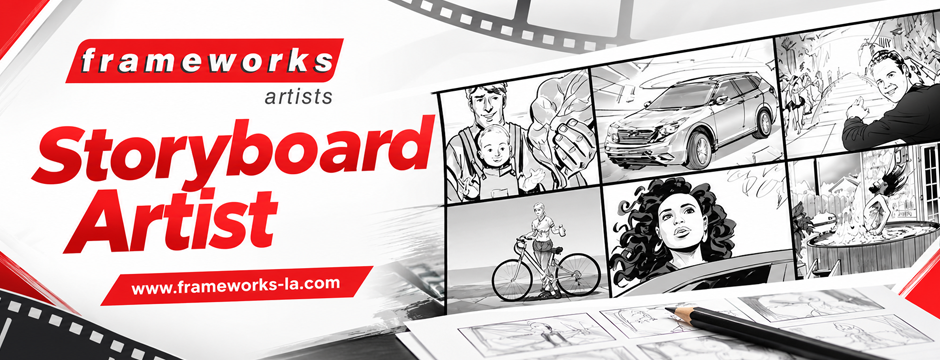
Look for Relevant Industry Experience
Experience can make a significant difference, particularly when a project has complex production requirements. Someone who has previously worked on similar types of productions may already understand common workflows, terminology, deadlines, and revision processes.
Relevant experience might include work in:
- Feature films
- Television productions
- Animation
- Commercials
- Music videos
- Video games
- Promotional content
- Short films
- Visual effects productions
However, years of experience should not be the only deciding factor. An artist with fewer years in the industry may have precisely the visual approach a particular project needs. The most important consideration is whether the artist’s previous work demonstrates the skills and understanding required for the current production.
Match Experience With the Type of Project
Experience becomes particularly valuable when it directly relates to the project’s subject matter or technical challenges. For example, an action-heavy production may benefit from someone comfortable illustrating dynamic movement, complex choreography, and dramatic camera changes.
A project centered on character relationships may instead require an artist who excels at expressions, subtle body language, and emotional staging.
For animation, knowledge of sequential storytelling and character consistency can be particularly important. For advertising, the ability to communicate a product, brand message, or visual concept quickly may take priority.
The key is relevance. Rather than asking only, “How experienced is this artist?” consider asking, “How relevant is this artist’s experience to our production?”
Review the Storyboard Process
Before hiring someone, it can be useful to understand how they approach a project from beginning to end. A well-defined process can reduce confusion and make collaboration more efficient.
A typical workflow may involve reviewing the script, discussing creative objectives, identifying key shots, producing initial sketches, incorporating feedback, and developing approved frames. Depending on the production, additional revisions may be necessary.
Ask how the artist handles notes and revisions. Find out how they interpret changes in camera direction, blocking, character action, or scene composition. Communication is especially important when several departments depend on the visual plan.
A professional who is receptive to feedback and able to make thoughtful adjustments can become a valuable creative collaborator rather than simply someone completing individual drawings.
Think About Communication and Collaboration
Productions are collaborative environments. Directors, writers, cinematographers, producers, designers, and other specialists may all contribute ideas that influence the visual plan.
For that reason, communication skills should be considered alongside artistic ability. The ideal professional should be comfortable asking questions, clarifying ambiguous scenes, discussing alternatives, and explaining visual decisions when necessary.
Clear communication can also prevent costly misunderstandings. A scene that appears obvious in a script may have multiple possible visual interpretations. Discussing those possibilities early can help the production team establish a shared vision before resources are committed to filming or animation.
Examine the Portfolio Carefully
A portfolio is often the best starting point for evaluating an artist’s suitability. Instead of simply looking at individual images, examine complete sequences whenever possible.
Look for evidence of consistency from one frame to another. Do characters remain recognizable? Does screen direction remain clear? Are camera movements understandable? Can you follow the action without needing extensive verbal explanation?
Storyboard Artists who can maintain visual continuity while communicating complex scenes demonstrate an ability that goes beyond individual illustration.
It can also be helpful to look for versatility. An artist who can adapt between intimate dialogue, action, environmental storytelling, and complex compositions may be better suited to productions containing a wide variety of scenes.
Discuss Deadlines and Revisions Early
Time is an important production consideration. Before work begins, establish realistic expectations regarding deadlines, milestones, deliverables, and revisions.
A large project may benefit from breaking the work into stages so that creative decisions can be reviewed before the entire sequence is completed. This approach can reduce the risk of extensive changes later.
It is also important to clarify what constitutes a revision. Changes to a pose or camera angle may be relatively simple, while restructuring an entire sequence can require substantial additional work.
Establishing these expectations at the beginning helps both the production team and the artist plan their time effectively.
Consider Budget Alongside Value
Budget naturally influences creative decisions, but the lowest quote is not always the most economical choice. A professional who understands the project’s requirements and communicates effectively may help prevent confusion, unnecessary revisions, and production mistakes.
The value of visual planning becomes particularly apparent when a project includes complicated sequences. Identifying potential problems before production can save time and resources later.
Instead of comparing prices alone, consider the complete value offered: artistic quality, relevant experience, communication, reliability, turnaround time, and understanding of the project’s goals.
Ask the Right Questions Before Hiring
A few focused questions can make the selection process easier. Consider asking:
- Have you worked on projects similar to ours?
- What types of scenes are your strongest?
- How do you approach interpreting a script?
- What information do you need before beginning?
- How do you handle revisions?
- What is your typical turnaround time?
- What format will the final work be delivered in?
- Are you comfortable collaborating with directors and other departments?
- Can you provide examples of sequential work rather than individual frames?
The answers can provide useful insight into both technical capabilities and working style.
Make the Decision Based on Overall Fit
Ultimately, choosing the right professional involves balancing several factors. Artistic style should fit the project’s visual identity. Experience should be relevant to the production’s challenges. Communication should support collaboration, and the workflow should fit the project’s schedule and budget.
There is no universal definition of the perfect artist. A production may need highly polished frames, while another may benefit from fast, expressive sketches. One project may prioritize action expertise, while another may depend heavily on emotional storytelling.
The strongest choice is the person whose abilities align with what the production actually needs.
Bring Your Vision to Life With Experienced Storyboard Professionals
Frameworks Artists, connects productions with talented visual storytellers who understand the importance of turning creative ideas into clear, compelling frames. From black-and-white and color storyboards to feature and animation projects, we offer access to artists with diverse styles and subject-matter expertise. Our professionals can help visualize camera angles, action, composition, character movement, and key storytelling moments, giving directors and production teams a stronger visual foundation before production begins. Whether you need a specific artistic style or an artist experienced in a particular type of project, we work to match your requirements with the right creative talent. Let us help transform your script and creative vision into storyboards that communicate your ideas with clarity and impact.
Conclusion
Choosing the right Storyboard Artist is an important creative decision that can influence how effectively a production moves from concept to screen. By carefully evaluating artistic style, relevant experience, storytelling ability, communication, workflow, deadlines, and project-specific requirements, production teams can find a professional who contributes meaningful value during pre-production.
The objective is not simply to find someone who can draw. It is to find a visual storyteller who can understand the project’s intentions, communicate ideas clearly, collaborate with the creative team, and help transform a written concept into a practical visual plan. With the right match, storyboarding can provide greater clarity, stronger creative alignment, and a more confident path toward production.
Frequently Asked Questions
1. What does a storyboard artist do?
A storyboard artist transforms scripts, concepts, and creative directions into sequential visual frames that help production teams plan scenes before filming or animation begins.
2. Why is storyboarding important for a production?
Storyboarding provides a visual blueprint for scenes, helping directors and production teams understand composition, camera angles, movement, pacing, and overall visual direction.
3. Should I choose a black-and-white or color storyboard artist?
It depends on your project’s needs. Black-and-white storyboards can communicate action and composition efficiently, while color can provide additional information about mood, lighting, and visual appearance.
4. Can storyboard artists work on feature films and animation?
Yes. Different artists specialize in different production formats, including feature films, animation, commercials, and other visual projects.
5. What should I look for when choosing a storyboard artist?
Consider the artist’s portfolio, visual style, relevant experience, storytelling ability, versatility, communication skills, and familiarity with your type of production.
6. Can a storyboard artist work with a specific visual style?
Yes. Many professionals have specialized styles or subject-matter expertise, so it is important to review their previous work and communicate your project’s visual requirements.
7. When should I hire a storyboard artist?
Ideally, a storyboard artist should be involved during pre-production, allowing the creative team to develop and refine the visual plan before filming or animation begins.
Tags: Animation Storyboards, Commercial Storyboards, Creative Storytelling, Film Production, Pre Production, storyboard artist, storyboard design, storyboard services, Storyboarding, Visual Storytelling