


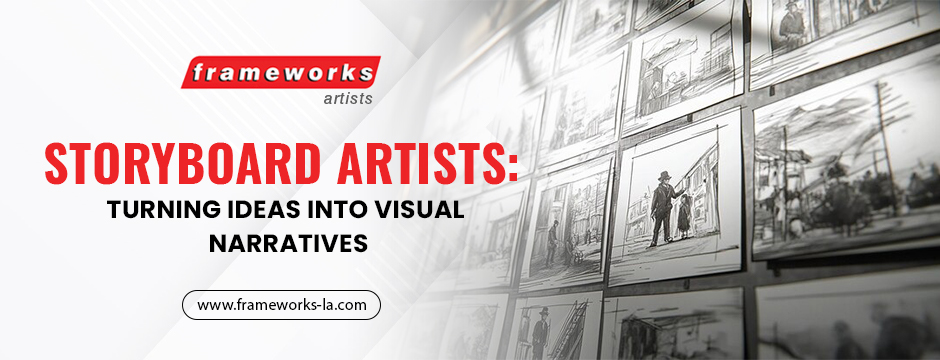
Every compelling visual production begins with an idea, but transforming that idea into a sequence requires careful visual planning. Storyboard artists bridge the gap between written concepts and screen-ready imagery by translating scripts, creative briefs, and directions into a structured visual sequence. Their work can help directors, cinematographers, producers, and creative teams understand how a scene may unfold before production begins.
From advertising campaigns and branded films to feature productions and animation, storyboarding provides an opportunity to explore composition, framing, movement, character positioning, and visual continuity. A thoughtfully planned sequence can make creative discussions more precise while helping production teams identify potential challenges early.
In this blog, the discussion explores how storyboard artists shape visual concepts, the role of different artistic approaches, the value of professional storyboard support, and how carefully developed boards can strengthen the production planning process.
Storyboard Artists Bring Written Ideas Into Focus
A script communicates dialogue, actions, locations, and narrative direction, but it does not always show exactly how those elements should appear on screen. This is where the visual interpretation skills of storyboard artists become valuable.
Translating Words Into Images
Artists interpret written material and transform important moments into individual visual frames. These frames can establish the intended sequence while giving creative teams a shared reference point.
Supporting Creative Decisions
A storyboard can help teams discuss camera angles, composition, transitions, character placement, and visual rhythm before cameras roll. This makes creative conversations more concrete and easier to evaluate.
Strengthening Pre-Production
Visual planning can also help production teams anticipate requirements. By considering the sequence beforehand, filmmakers can identify complicated shots, continuity concerns, or visual transitions that may need additional preparation.
Creating Artwork That Communicates Every Scene Clearly
Effective visual planning is not simply about producing attractive drawings. The artwork needs to communicate the creative intention of each shot clearly enough for other members of the production team to understand.
Visual Clarity Comes First
Strong storyboard artwork should communicate the essential information within a frame. Composition, perspective, character positioning, and environmental details can work together to establish what viewers are expected to see.
Style Can Shape Interpretation
Different projects may require different visual treatments. Some concepts benefit from expressive black-and-white sketches, while others may need color to communicate atmosphere, lighting, wardrobe, environments, or visual tone.
Detail Should Serve The Story
A storyboard does not necessarily need to reproduce every production detail. Instead, its level of detail should support the project’s purpose and make important visual information easy to understand.
Building Visual Sequences Before Production Begins
Storyboards function as a visual roadmap, allowing creative teams to examine how individual shots connect to form a complete sequence. This can be especially useful when a project involves complex movement, multiple locations, or carefully coordinated visual storytelling.
Planning Camera Language
Boards can illustrate changes in perspective, framing, shot direction, and camera movement. This gives directors and production teams a clearer foundation for discussing how scenes should be captured.
Establishing Continuity
A sequence of boards can make it easier to track characters, environments, props, and actions from one frame to another. Maintaining this visual consistency is important when scenes are filmed out of chronological order.
Exploring Alternatives
Because storyboards are created during planning, creative teams can review different approaches before committing production resources. A sequence can be adjusted, rearranged, or refined as the concept develops.
Choosing The Right Visual Approach For Productions
Every project has its own creative identity, which means the ideal storyboard approach can vary significantly. A commercial may require concise visual communication, while animation or feature work may demand broader sequence planning.
Matching Art to the Project
Professional storyboards can be adapted to the visual requirements of the production. The approach may depend on genre, subject matter, intended audience, production scale, and the level of visual information needed.
Black and White Possibilities
Monochrome boards can place greater emphasis on composition, perspective, movement, and framing without relying heavily on color information. They can be particularly effective when the primary objective is communicating the structure of a sequence.
Color for Greater Visual Context
Color boards can provide additional information about mood, environments, lighting, wardrobe, and visual atmosphere. They may be particularly useful when color plays an important role in the creative direction.
Working With Professional Visual Storytelling Specialists
Finding the right creative professional can influence how effectively a concept is translated into a visual plan. Productions often require artists who understand not only drawing but also cinematic language, composition, storytelling, and the practical requirements of production.
Reviewing Relevant Experience
When considering storyboard artists for hire, production teams can review portfolios for examples that reflect their project’s style, subject matter, and visual requirements.
Considering Style and Subject Matter
An artist’s approach should complement the project’s creative direction. Different artists may have strengths in areas such as advertising, feature productions, animation, action-oriented sequences, or particular visual styles.
Communication Matters
Storyboarding is a collaborative attempt. Artists need to understand creative feedback and translate changing requirements into useful visual revisions. Clear communication between artists and production teams can help keep the boards aligned with the evolving concept.
How Frameworks Artists Supports Visual Production Planning
Frameworks Artists is a Los Angeles-based artist resource representing storyboard professionals across different visual approaches. Our storyboard artist offering includes dedicated black-and-white and color artists, while the company also notes that additional artists, specific styles, or subject matter features and animation storyboard artists may be available.
A Broad Range of Artists
Our listed roster includes artists working in both black-and-white and color formats, giving productions opportunities to explore different approaches to visual planning.
Supporting Different Production Needs
Our additional storyboard artists and artists with animation storyboard capabilities are suited to particular styles or subject matter.
A Resource For Creative Teams
For productions seeking visual development support, the company provides access to a curated group of artists whose work can help translate concepts into organized visual sequences. This can give creative teams greater flexibility when selecting an approach suited to their project.
From Concept Sketches To Production-Ready Thinking
Storyboarding sits at an important point between imagination and execution. It allows creative ideas to become visible, discussable, and adjustable before significant production resources are committed.
Rather than functioning as simple illustrations, boards can become communication tools shared across creative and production departments. Directors can use them to discuss visual direction, cinematographers can consider framing, and production teams can better understand the requirements of planned sequences.
This collaborative role makes storyboarding particularly valuable when a project involves many contributors. A shared visual reference can reduce ambiguity and keep different teams aligned around the same creative vision.
Conclusion
Great visual storytelling begins long before a camera starts recording. Storyboard artists help transform written concepts into visual sequences that clarify composition, movement, framing, and narrative progression. Whether a production requires expressive sketches, detailed color boards, advertising visuals, feature work, or animation planning, the right artistic approach can strengthen the entire pre-production process.
Frameworks Artists brings together storyboard professionals working across black-and-white and color formats while also offering access to additional styles, subject matter, features, and animation artists. By connecting productions with suitable visual storytelling talent, we can help creative teams turn early concepts into clearer visual plans and approach production with greater confidence.
FAQs
1. What do storyboard artists do?
Storyboard artists translate scripts and creative concepts into visual sequences that help production teams plan scenes, framing, movement, and composition.
2. What makes effective storyboard artwork?
Effective storyboard artwork communicates essential visual information clearly, including composition, perspective, character positioning, and scene progression.
3. Why are storyboards important in production?
Storyboards provide a visual roadmap that helps creative teams evaluate sequences, discuss camera language, and identify potential production challenges before filming.
4. When should you look for storyboard artists for hire?
You can consider storyboard artists for hire during pre-production when a project needs professional visual planning, sequence development, or creative interpretation.
5. Can storyboard artists work in color and black-and-white?
Yes. Storyboard artists can work in different visual treatments. Frameworks Artists lists both black-and-white and color storyboard artists.
Tags: Cinematic Storyboarding, Los Angeles Storyboard Artists, Pre Production, Pre-Production Planning, Storyboard Artists for Hire, storyboard artwork, storyboard services, Visual Storytelling