


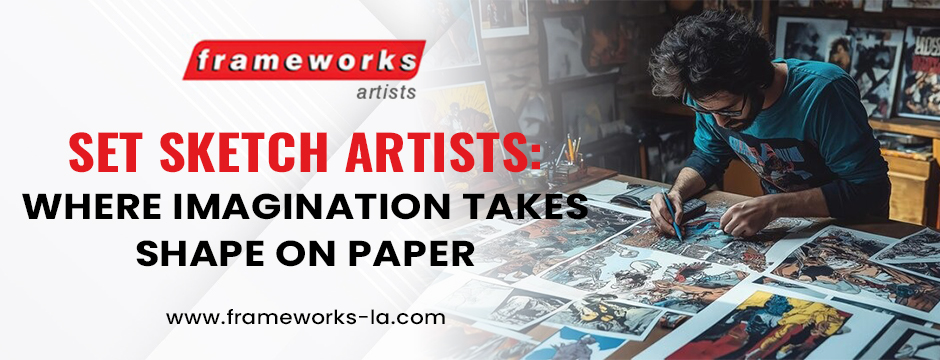
A strong visual concept often begins with a simple drawing that communicates an idea before it becomes a physical set. Set sketch artists play an important role in transforming written concepts, creative briefs, and visual references into detailed sketches that help directors, production designers, and creative teams understand how a scene may look. From films and television to advertising, theatre, and live events, these sketches can provide a visual foundation for developing memorable environments.
Let this blog explore how set sketches support creative production, why professional sketching matters, how set design teams use these visuals, and what to consider when choosing artists for a project.
How Set Sketches Shape Creative Production Decisions
A production environment involves countless visual decisions. The placement of structures, furniture, props, lighting elements, entrances, and decorative features can influence how a scene feels. Sketches allow creative teams to examine these decisions before construction or production begins.
- Translate written concepts into visual references.
- Help teams understand spatial relationships.
- Support discussions between directors and designers.
- Provide an early view of the proposed environment.
- Make it easier to identify changes before production.
A well-prepared sketch can therefore become a practical communication tool. Instead of relying only on descriptions, teams can discuss a visual representation of the proposed environment and make more informed creative choices.
Why Set Design Artists Improve Professional Set Planning
Planning a set requires more than artistic ability. The sketch must communicate proportions, perspective, composition, and important visual elements clearly. Professional artists understand how to combine these aspects while maintaining the creative direction of the project.
- Establish perspective and visual depth.
- Show important architectural and decorative details.
- Communicate scale and proportions.
- Highlight key focal points within a scene.
- Allow revisions before physical implementation.
Working with experienced set design artists can make the early planning process more productive because their drawings can bridge the gap between an initial idea and a more developed production concept.
Set Design Sketch Artists Bring Ideas Together
A production may involve directors, writers, producers, cinematographers, art departments, and other creative professionals. Each person can have a different interpretation of how a scene should appear. Visual sketches help bring these perspectives together.
- Create a shared visual reference.
- Clarify the intended atmosphere.
- Demonstrate relationships between set elements.
- Support creative presentations and approvals.
- Help different departments coordinate their work.
Experienced set design sketch artists can interpret creative instructions and develop drawings that communicate the intended environment. This makes it easier for everyone involved to discuss the same visual concept before moving forward.
Creating Atmosphere Through Detailed Set Sketches
A set is not simply a collection of physical objects. Its design can establish mood, time period, character, and narrative context. A carefully developed sketch can communicate many of these qualities through composition and visual details.
- Use architectural elements to establish location.
- Suggest period-specific design characteristics.
- Include furniture and props relevant to the scene.
- Indicate visual hierarchy and focal areas.
- Communicate the overall character of the environment.
The work of artists can be particularly valuable when atmosphere is central to storytelling. Their sketches can help creative teams explore whether a proposed environment communicates the desired tone before committing significant resources to production.
Sketching Supports Efficient Production Workflows
Production schedules can be demanding, and changes made late in the process can become costly or difficult to implement. Detailed sketches provide an opportunity to examine ideas earlier and reduce uncertainty during later stages.
- Identify design challenges at an early stage.
- Encourage feedback before construction begins.
- Reduce misunderstandings between departments.
- Provide references for production planning.
- Make design revisions easier to communicate.
This is where professional artists can contribute beyond creating attractive drawings. Their work can become part of the planning process, helping teams evaluate visual possibilities before moving into more resource-intensive stages.
How Sketches Help Present Creative Concepts
Creative proposals often need approval from people who were not involved in developing the original idea. Written explanations may not always communicate the intended visual experience effectively. A strong sketch can make the concept easier to understand at a glance.
- Strengthen creative presentations.
- Make concepts easier for clients to visualize.
- Demonstrate design direction clearly.
- Support pitch decks and project proposals.
- Provide a professional representation of an idea.
When artists create presentation-ready visuals, their work can help transform abstract concepts into understandable visual proposals. This can be especially useful during the early stages of entertainment, commercial, and event-related projects.

Balancing Artistic Detail With Practical Requirements
A beautiful sketch must still serve the requirements of production. The drawing should communicate the important design elements without becoming disconnected from practical considerations such as available space, movement, functionality, and construction possibilities.
- Maintain clear proportions and perspective.
- Consider how people interact with the environment.
- Include essential structural details.
- Keep the intended production purpose in focus.
- Balance visual appeal with practical communication.
Professional artists understand that their sketches may be reviewed by multiple departments. As a result, clarity is just as important as artistic quality. The best sketches allow creative teams to appreciate the visual direction while also understanding the practical structure of the proposed set.
Choosing Artists for Different Creative Requirements
Every project has its own visual language. A historical production may require detailed architectural references, while an advertisement could need a highly stylized environment. Selecting an artist whose approach matches the project’s needs can make a significant difference.
- Review the artist’s portfolio and previous work.
- Consider their experience with relevant project types.
- Evaluate their approach to perspective and detail.
- Look for adaptability across different visual styles.
- Discuss expectations and project requirements clearly.
The right sketch artists should be able to understand the project’s creative direction and translate it into visuals that are useful to the wider production team. Portfolio quality, communication, adaptability, and consistency are therefore important factors to consider.
Frameworks Artists and Professional Sketching Expertise
Choosing a suitable creative partner can simplify the process of turning production ideas into visual concepts. Frameworks Artists provides access to professional artists whose work can support different creative and visual development requirements.
- Explore sketching expertise for production concepts.
- Review portfolios to identify suitable artistic styles.
- Consider artists according to the project’s visual needs.
- Use professional sketches to strengthen early-stage planning.
- Select an approach that aligns with the project’s creative direction.
For projects that depend on strong visual communication, working with experienced artists can help creative teams move more confidently from an initial idea toward a developed visual concept.
Bringing Creative Concepts Into Clear Visual Form
Set sketching is an important part of visual development because it gives production teams something tangible to evaluate before a concept becomes a physical environment. From establishing perspective and atmosphere to supporting presentations and coordinating departments, professional sketches can contribute to many stages of creative planning.
The value of set sketch artists extends beyond creating drawings. Their work helps transform imagination into a visual language that directors, designers, clients, and production teams can understand and discuss. With the right artistic approach, sketches can make creative decisions clearer, revisions more manageable, and production planning more purposeful.
For teams seeking professional artistic support, Frameworks Artists can be considered as a creative resource for developing visual concepts and production-focused sketches. Ultimately, effective set sketching can provide the visual foundation needed to turn creative ideas into compelling environments.
Frequently Asked Questions
1. What do set sketch artists do?
Set sketch artists turn production concepts into visual sketches that help teams understand environments, layouts, perspectives, and design ideas.
2. How do set design sketch artists support productions?
Set design sketch artists create visual references that help directors and production teams review, refine, and communicate proposed set concepts. Frameworks Artists provides access to professional artists for creative projects.
3. Why are set design artists important?
Set design artists help communicate atmosphere, structure, scale, and visual direction before a physical set is developed.
4. When should I hire set sketch artists?
Set sketch artists can be engaged during early concept development, pre-production, presentations, or whenever a project requires clear visual planning.
5. What should I consider when choosing set design artists?
Consider portfolio quality, artistic style, perspective skills, adaptability, and experience relevant to your project. Frameworks Artists provides portfolios to help identify suitable creative talent.
Tags: Creative Production, Production Sketch Artists, Set Design Artists, Set Design Planning, Set Sketch Artists, Set Sketching