


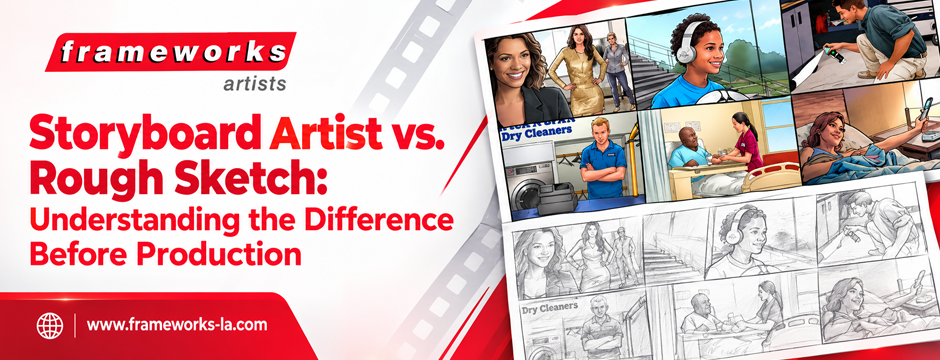
Every visual production begins with an idea, but turning that idea into a clear sequence of images requires more than simply putting thoughts on paper. Films, commercials, music videos, animation projects, and other visual productions often involve numerous creative and technical decisions before actual production begins. A Storyboard Artist helps transform those decisions into a visual plan that can be understood and discussed by the wider production team. Rough sketches can also be useful during the early creative process, but they serve a different purpose.
Knowing the difference between a rough sketch and a professionally developed storyboard can help directors, producers, writers, cinematographers, and production designers determine how much visual planning a project needs. While a rough sketch may communicate an initial idea, a well-developed storyboard can provide a much more organized representation of how that idea is intended to appear on screen.
What Is a Rough Sketch?
A rough sketch is typically an early visual exploration of an idea. It is often created quickly, with emphasis placed on capturing the basic concept rather than communicating every production detail. Lines may be loose, proportions may be approximate, and certain elements may be left undefined.
For example, a director might sketch a character standing near a doorway while another character approaches from the background. The drawing may be enough to communicate the general concept during a creative discussion. It can then be changed, discarded, or developed further as the idea evolves.
This flexibility makes rough sketches valuable during brainstorming. They allow creative professionals to experiment with compositions, poses, locations, and visual concepts without spending substantial time refining every frame.
However, rough sketches generally are not intended to function as comprehensive production documents. They may leave important questions unanswered, particularly when multiple departments need to understand precisely how a sequence is expected to unfold.
What Makes a Storyboard Different?
A storyboard is designed to communicate a sequence visually rather than simply capture an isolated idea. It can present a series of frames showing how characters, environments, actions, and camera perspectives are expected to change from one shot to the next.
The distinction becomes particularly important when a production involves complicated movement or multiple visual departments. A professional Storyboard Artist understands that the drawings need to communicate more than what appears attractive on the page. They need to help convey visual storytelling, continuity, staging, composition, and the progression of action.
This requires an understanding of how individual frames relate to one another. A single drawing might look clear on its own, but a sequence must also make sense when viewed from beginning to end. Character positions, screen direction, entrances, exits, reactions, and changes in perspective may all need to remain consistent.
A storyboard therefore becomes a communication tool. It gives the production team something concrete to review before resources are committed to filming or animation.
Why Professional Storyboarding Matters Before Production
One of the major advantages of professional storyboarding is the opportunity to identify visual problems before they become production problems. A sequence that seems straightforward in a script may become considerably more complicated when translated into individual shots.
A professional Storyboard Artist can help visualize those shots and reveal where additional planning may be required. Perhaps an action sequence needs more coverage. Perhaps a particular camera position does not provide enough room for the intended movement. Maybe two consecutive shots create an unclear transition.
Identifying such issues during pre-production gives the creative team an opportunity to make adjustments while changes are still relatively manageable.
This does not mean that every production requires highly detailed drawings. The appropriate level of detail depends on the project’s scale, genre, visual complexity, budget, and production requirements. The important consideration is whether the visual material communicates enough information for the people who will use it.
Storyboards as a Communication Tool
A major strength of Storyboards is their ability to bring different members of a production team into the same visual conversation. Directors, cinematographers, production designers, editors, animators, visual-effects teams, and other specialists may interpret a written description differently.
A sequence of visual frames can establish a shared reference point.
For instance, a written instruction might describe a character entering a room, crossing the space, noticing something unexpected, and reacting. A visual sequence can demonstrate the approximate staging and progression much more directly. Team members can then discuss the intended shots, identify questions, and suggest adjustments before production begins.
This shared visual language can be particularly valuable when a project involves many departments. It reduces the need to rely entirely on verbal explanations and gives collaborators something specific to examine.
Rough Sketches Are Not the Enemy
The distinction between professional storyboarding and rough sketching should not suggest that rough sketches have little value. In fact, they can be extremely useful during the earliest stages of development.
Creative ideas often emerge quickly, and requiring polished artwork for every initial thought would slow down the development process. Rough sketches allow artists and directors to explore possibilities freely. They can test compositions, character positions, visual moods, and possible approaches before deciding which concepts deserve further development.
The key difference is purpose. A rough sketch is often exploratory, while a storyboard is generally intended to communicate a planned visual sequence.
Recognizing this distinction allows production teams to use both effectively. Rough sketches can help generate ideas, while professionally developed storyboards can help turn selected ideas into practical visual plans.
The Value of Visual Storytelling Expertise
Creating useful storyboard frames involves more than drawing recognizable objects and characters. The artist needs to understand how an image communicates action and how multiple images work together as a sequence.
A skilled Storyboard Artist can consider factors such as framing, perspective, camera placement, character staging, movement, continuity, and visual emphasis while translating a script or director’s concept into images.
This expertise becomes especially important when a scene contains complicated action. A chase, fight, crowd sequence, dramatic reveal, product demonstration, or emotionally significant interaction may require careful visual planning to ensure that the intended storytelling remains clear.
The artist’s role is therefore not simply to make the production look organized on paper. It is to help make the intended visual storytelling easier to understand before the production team commits time and resources to executing it.
When a Rough Sketch May Be Enough
Not every scene requires a highly detailed storyboard. A simple production with straightforward shots may be adequately planned through rough visual references or basic sketches. In other cases, the director may already have a clear understanding of the desired shots and may only need minimal visual preparation.
The decision should be based on the project’s actual needs.
If a scene involves relatively simple compositions, limited movement, and few technical challenges, extensive storyboard development may not be necessary. Conversely, sequences involving complicated blocking, visual effects, animation, stunts, unusual camera movement, or significant continuity requirements can benefit considerably from more comprehensive visual planning.
The objective is not to replace creativity with rigid planning. It is to provide enough visual information to support creativity while reducing avoidable uncertainty.
When to Bring in a Professional
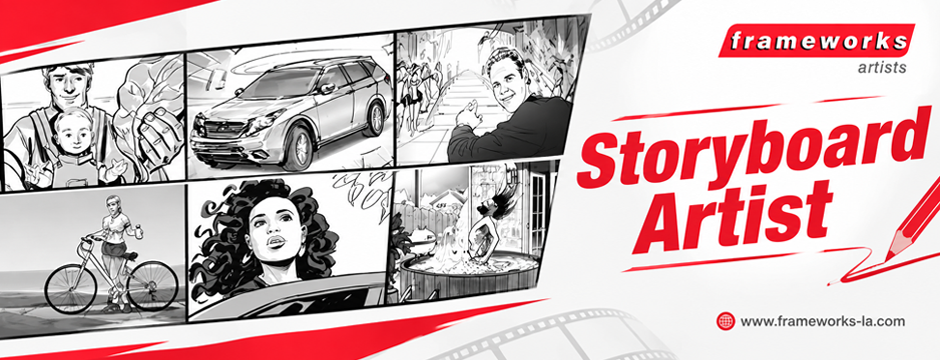
A professional Storyboard Artist can be particularly valuable when a production needs to communicate a visual concept clearly across multiple people or departments. This can include feature films, television productions, commercials, animation, music videos, branded content, and complex promotional projects.
Professional involvement can also be useful when the director has a strong concept but needs assistance translating that concept into a coherent sequence of frames. An experienced artist can interpret the available information, ask relevant visual questions, and develop drawings that help others understand the intended result.
The collaboration can be highly flexible. Some directors provide detailed shot descriptions, while others communicate primarily through conversation, reference images, scripts, or visual examples. The artist can then develop the material according to the project’s requirements.
Choosing the Right Level of Detail
The best visual planning is not necessarily the most elaborate. Detail should serve communication.
A production may need simple black-and-white frames for rapid planning, while another project may benefit from more developed drawings that communicate environments, character poses, lighting direction, or other visual elements. The appropriate approach depends on what the production team needs to understand.
This is one reason experience matters. An experienced storyboard professional can determine which visual information deserves emphasis and which details can remain simplified. The goal is to make every frame useful rather than merely decorative.
Good planning also leaves room for creative changes. Production is rarely completely predictable, and directors may adjust shots once they see locations, actors, sets, or other practical elements. A strong visual plan should support decision-making without preventing creative adaptation.
Making the Right Choice Before Production
The difference between a rough sketch and professional storyboard development ultimately comes down to function, communication, and the complexity of the production. Rough sketches are excellent tools for exploring possibilities quickly, while professionally developed visual sequences can provide a clearer framework for executing an established concept.
For productions where visual continuity, camera planning, movement, or collaboration between departments is important, bringing in a Storyboard Artist can provide substantial value during pre-production. Their work can help transform abstract ideas into a sequence that the broader team can see, discuss, refine, and prepare to execute.
Understanding this distinction allows creative teams to use rough sketches where speed and experimentation matter while recognizing when a more structured visual approach is needed. The result is not simply better drawings; it is clearer communication, more deliberate visual planning, and greater preparation before production begins.
Bring Your Production Vision Into Focus
At Frameworks Artists, we help transform creative concepts into clear, purposeful visual plans through professional storyboard artistry. Our roster includes talented artists working across black-and-white and color storyboarding, with specialized experience for feature films, animation, commercials, and varied subject matter. We understand that effective storyboards need to communicate composition, movement, continuity, and visual storytelling—not simply reproduce a rough sketch. Whether you need a distinctive visual style or support for a complex sequence, our artists can help you explore, refine, and communicate your vision before production begins. Let us help turn your ideas into production-ready visuals.
Conclusion
A rough sketch can capture an idea, but professional storyboarding can help turn that idea into a visual roadmap for production. The two approaches complement one another, yet they should not be treated as interchangeable. When a project requires clear sequencing, thoughtful composition, consistent movement, and effective communication between creative departments, the expertise of a Storyboard Artist can become an important part of the pre-production process.
Frequently Asked Questions
- What is the difference between a storyboard and a rough sketch?
A rough sketch explores an idea, while a storyboard presents a structured sequence of planned shots.
- Why is a Storyboard Artist important before production?
They help visualize composition, movement, camera perspectives, continuity, and scene progression before production begins.
- Are rough sketches useful in production planning?
Yes. Rough sketches are useful for quickly exploring concepts before developing them into more structured visuals.
- What does a professional storyboard communicate?
It can communicate framing, character positioning, action, camera movement, transitions, and visual continuity.
- Do all productions require detailed storyboards?
No. The required level of detail depends on the project’s complexity, visual requirements, and production needs.
- Can storyboards help different production departments collaborate?
Yes. They provide a shared visual reference that can help directors, cinematographers, designers, animators, and other teams understand a sequence.
- When should you hire a Storyboard Artist?
A professional can be especially useful for complex action, animation, visual effects, commercials, feature films, and sequences requiring detailed visual planning.
Tags: Cinematic Storyboarding, Commercial Storyboarding, Concept Development, Creative Production, Pre Production, Rough Sketches, storyboard design, Storyboarding, Storyboards, Visual Storytelling