


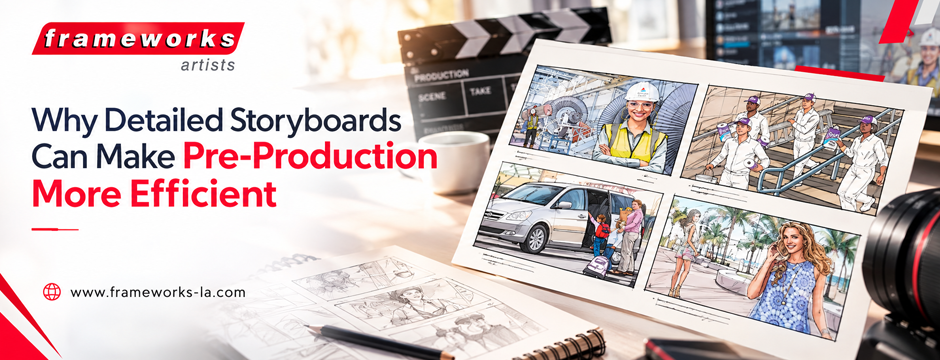
Pre-production is where many of the most important decisions in a creative project are made. Before cameras begin rolling, directors, producers, cinematographers, designers, and other members of the production team need to understand how a project will look and unfold. Storyboards provide a visual framework that helps transform written ideas into a practical production plan. By illustrating important shots, compositions, camera positions, character movements, and transitions in advance, they can make communication clearer and reduce uncertainty throughout the preparation process.
Turning Written Ideas Into Visual Plans
A script can describe actions, dialogue, locations, and emotions, but written descriptions do not always communicate exactly how a scene should appear on screen. Different members of a production team may interpret the same description in different ways.
A detailed visual plan provides another layer of clarity. It allows the creative team to examine individual moments before production begins and determine how those moments might be captured. Questions about framing, perspective, movement, and scene progression can be considered early rather than being solved under the pressure of a shooting day.
This visual approach can be especially useful when a sequence involves complicated action, multiple characters, unusual camera movements, or carefully coordinated transitions.
Improving Communication Between Departments
Large productions often involve numerous departments working toward the same creative objective. Directors may be focused on storytelling, cinematographers on camera and lighting, production designers on environments, and assistant directors on scheduling and logistics.
Detailed visual references can give these departments a common point of reference. Instead of relying exclusively on verbal explanations, team members can discuss specific frames and identify what needs to be prepared.
For example, a frame may reveal that a particular background element needs to be constructed, a prop needs to be positioned in a specific location, or additional space is required for camera movement. Identifying these requirements early can help departments coordinate their work more effectively.
Helping Directors Refine Creative Decisions
Creative ideas frequently change during pre-production. A director may discover that a particular sequence would be stronger from another angle, that a transition needs to happen earlier, or that a scene contains unnecessary visual information.
A visual planning process makes it easier to experiment with these possibilities before resources are committed to filming. Different approaches can be reviewed, discussed, revised, and organized while changes are still relatively simple to make.
This process can also help separate essential visual moments from secondary details. When each shot is considered individually, the overall sequence becomes easier to evaluate from a storytelling perspective.
Making Camera Planning More Precise
Camera planning is one of the areas where visual preparation can provide significant practical benefits. Decisions about shot size, angle, perspective, movement, and transitions can influence equipment requirements and the amount of time needed on set.
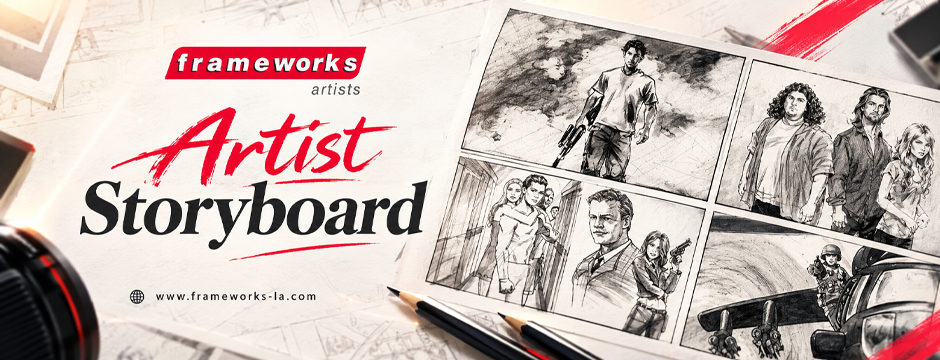
An Artist Storyboard can communicate these visual intentions through carefully constructed frames, giving the production team a clearer understanding of how the planned shots relate to one another.
For technically demanding sequences, this preparation can help identify potential problems before filming. A camera move that appears straightforward in a script may require additional equipment, crew members, rehearsal time, or space. Visualizing it beforehand gives the team an opportunity to assess those requirements.
Supporting More Accurate Scheduling
Production schedules depend on many factors, including locations, equipment, cast availability, set preparation, lighting requirements, and the complexity of individual shots.
When shots have been considered and organized in advance, production planners can gain a clearer understanding of what each sequence requires. This can contribute to more realistic scheduling and reduce the likelihood of overlooking important preparation tasks.
Detailed visual plans can also help identify shots that may require additional setup time. Rather than discovering these requirements during production, the team can account for them when building the schedule.
Reducing Unnecessary Production Costs
Time spent on set can be expensive. Equipment, locations, crew, talent, and other production resources may all contribute to the cost of a shooting day. Unexpected changes or repeated setups can therefore have a significant financial impact.
Thorough planning can reduce some of this uncertainty by allowing the team to examine the sequence before filming. If a particular shot does not contribute meaningfully to the final result, it can be reconsidered. If two shots can be combined efficiently, that possibility can be explored in advance.
In commercial production, Advertising Storyboards can be particularly useful for reviewing a proposed visual sequence before production resources are committed. They can help creative and production teams understand the intended progression of a commercial and identify areas that may need refinement.
Making Complex Scenes Easier to Organize
Action sequences, crowd scenes, vehicle movements, special effects, and scenes involving several performers can quickly become difficult to coordinate. Without sufficient preparation, even relatively short sequences may require extensive discussion on the day of filming.
A detailed visual sequence can break complicated scenes into manageable individual shots. Each frame can represent a specific moment, allowing the team to consider where characters are positioned, how they move, what the camera sees, and how one shot connects to the next.
This can be particularly valuable when timing and continuity are important. By establishing the intended visual progression beforehand, the production team has a reference to consult during rehearsals and filming.
Strengthening Client and Stakeholder Presentations
Pre-production often involves more than internal creative planning. Projects may need approval from clients, producers, agencies, investors, or other stakeholders.
Visual materials can make creative proposals easier to understand, particularly for people who were not involved in developing the original concept. Instead of asking stakeholders to imagine how a written description might translate to the screen, a sequence of visual frames can demonstrate the intended direction.
This can make feedback more specific and productive. Stakeholders can respond to particular compositions, transitions, or sequences rather than providing broad reactions to an idea that has not yet been visualized.
Improving Continuity and Visual Consistency
Continuity is another important consideration during production. Characters, props, environments, camera positions, and actions may need to remain consistent across multiple shots or shooting days.
Detailed visual planning can provide a reference for these elements. By documenting the intended appearance and progression of a scene, the team has a visual guide that can be consulted when questions arise.
This becomes especially useful when scenes are filmed out of chronological order. A clear visual reference can help production teams maintain consistency even when the actual shooting schedule differs from the order in which the story unfolds.
Creating a Clearer Path From Concept to Production
The primary value of detailed visual planning is not simply that it creates attractive images. Its greater purpose is to connect creative thinking with practical execution.
When ideas are visualized early, creative teams can identify weaknesses, explore alternatives, communicate expectations, and prepare resources before production begins. This can create a more organized workflow in which fewer major decisions have to be made at the last minute.
It also gives the production team a shared understanding of the intended result. While creative flexibility remains important, having a well-developed visual foundation can make it easier to determine when changes are necessary and when a planned approach should remain consistent.
Bring Your Creative Vision to Life with Professional Storyboarding
Frameworks Artists, Inc. provides professional visual development services for entertainment, advertising, and commercial production. We connect creative ideas with compelling visuals through skilled storyboard, comp, concept, and production illustration services. Our experienced team works across digital and traditional formats, helping clients communicate their vision clearly, plan productions efficiently, and transform concepts into polished, presentation-ready artwork.
Conclusion
Efficient pre-production depends on preparation, communication, and the ability to anticipate challenges before they affect the shooting schedule. Storyboards can support all three by turning creative concepts into visual plans that production teams can review, discuss, refine, and implement. From improving camera planning and scheduling to supporting continuity and controlling unnecessary costs, detailed visual preparation can provide a practical foundation for smoother production. When thoughtfully developed, visual planning does more than illustrate a script—it helps connect creative vision with the many technical and logistical decisions required to bring that vision to the screen.
Frequently Asked Questions
- What are Storyboards?
Storyboards are visual representations of planned shots that help teams understand how a scene will unfold before filming.
- How do Storyboards improve pre-production?
They help teams plan shots, camera movements, locations, resources, and sequences before production begins.
- Can Storyboards help reduce production costs?
Yes. Detailed planning can identify unnecessary shots, potential problems, and resource requirements before filming.
- Who uses Storyboards during production planning?
Directors, producers, cinematographers, production designers, agencies, and other creative and technical teams can use them.
- Are Storyboards useful for advertising?
Yes. They can help creative and production teams visualize commercial concepts and communicate proposed sequences clearly.
- Can Storyboards improve communication between departments?
Yes. They provide a shared visual reference that can help different departments understand creative and technical requirements.
- Why are detailed Storyboards important for complex scenes?
They break complex sequences into individual shots, making camera movements, character positions, timing, and continuity easier to plan.
Tags: Advertising Storyboards, Camera Planning, Creative Production, Film Production, Pre Production, Production Design, Production Planning, Storyboard Art, storyboard services