


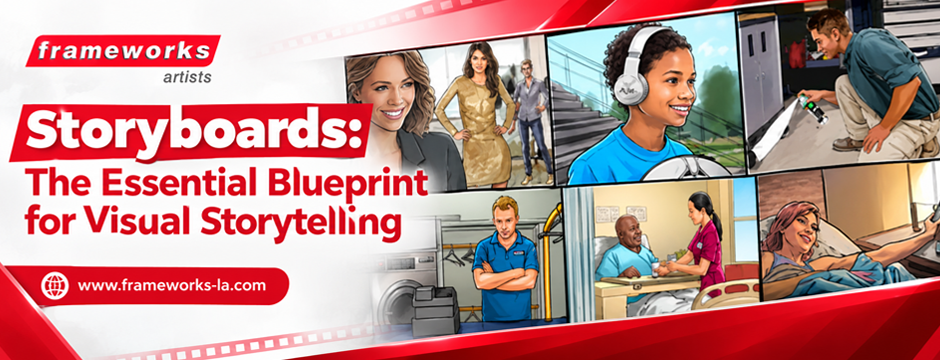
Visual storytelling plays an important role in film, television, advertising, animation, and many other forms of media. Before cameras begin rolling or artists start creating final visuals, creative teams often need a clear way to organize how a story will appear on screen. Storyboards provide that visual foundation by translating ideas, scripts, and creative concepts into a sequence of planned images. They help teams understand how individual scenes may look, how characters and objects interact, and how a story can move visually from one moment to the next.
What Are Storyboards?
A storyboard is a series of illustrations or visual frames arranged in sequence to represent the planned progression of a scene or production. Each frame generally communicates important information such as character positions, camera angles, movement, expressions, locations, and significant objects within the scene.
Storyboards can range from simple sketches to highly detailed illustrations. Their level of detail usually depends on the type of project and how much visual information the production team needs before moving forward. A simple storyboard may focus primarily on composition and camera direction, while a more developed version can include lighting, color, environments, costumes, and other visual elements.
The main purpose is not necessarily to create finished artwork. Instead, the goal is to communicate an idea clearly enough for directors, producers, cinematographers, designers, clients, and other members of a creative team to understand the intended visual direction.
Why Are They Important in Visual Storytelling?
Visual productions often involve many creative decisions. Without a visual plan, it can be difficult for everyone involved to interpret a script or concept in the same way. A storyboard provides a common visual reference that can make discussions more precise and organized.
For example, a written script may describe a character entering a room, noticing something unusual, and reacting with surprise. A visual plan can show where the character enters, where the camera is positioned, what the character sees, and how the reaction develops. This allows the creative team to examine the sequence before production begins.
Another important advantage is that potential problems can be identified earlier. An awkward camera angle, unclear movement, complicated composition, or unnecessary shot can often be recognized during the planning stage. Making changes on paper or digitally is generally easier than making them after filming or production has already started.
Storyboards as a Pre-Production Tool
Pre-production involves planning almost every major aspect of a visual project. Locations, costumes, props, camera setups, schedules, performances, and technical requirements may all need to be considered. Storyboards can connect many of these elements by showing how they are expected to work together within individual shots.
For advertising projects, visual planning can be particularly useful because commercial content often needs to communicate a message within a limited amount of time. A sequence of storyboard frames can help creative teams determine whether the intended idea can be presented clearly and efficiently.
In film and television, storyboards can also help establish shot sequences and visual continuity. Directors and cinematographers can use them as references when deciding how scenes should be filmed. Action sequences, complicated movements, special effects, and scenes involving multiple characters may benefit especially from detailed visual planning.
The Role of Storyboard Artists
Creating an effective visual sequence requires more than the ability to draw. Storyboard Artists need to understand visual composition, perspective, movement, storytelling, and cinematic language. They interpret scripts and creative directions and convert them into images that communicate the intended action.
A professional Storyboard Artist may need to determine how a character should be positioned within a frame, how the camera should appear to move, and which details are necessary for understanding the scene. They must balance artistic ability with practical communication, ensuring that the drawings serve the production rather than simply looking attractive.
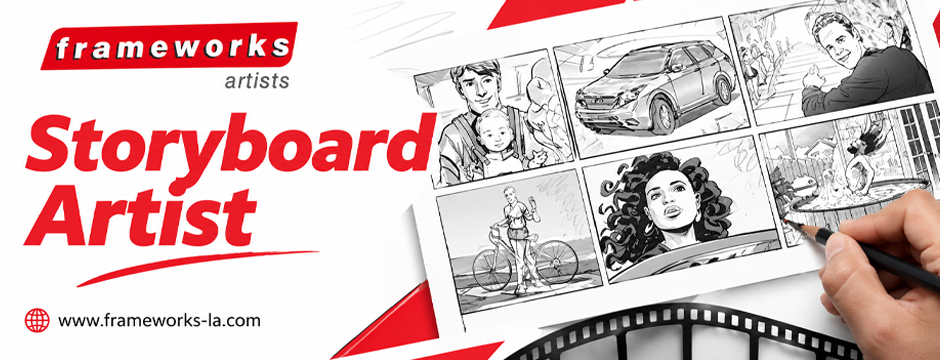
Depending on the project, storyboard professionals may work traditionally with pencil and paper or digitally using specialized illustration software. Digital workflows can make revisions, organization, sharing, and presentation more convenient, while traditional techniques can still be useful for quick visual exploration and conceptual development.
Different Types of Storyboards
Storyboards can take several forms depending on the requirements of a project. Thumbnail storyboards are usually quick, simplified drawings that focus on composition and basic action. They are often useful during early brainstorming when creative teams are exploring different possibilities.
More detailed boards may include facial expressions, environments, props, lighting, and camera information. These are often used when a production requires a clearer visual reference.
Color storyboards can provide additional information about the intended mood, atmosphere, and visual style. They may be particularly helpful for advertising, animation, presentations, and projects where color plays an important storytelling role.
Black-and-white boards, on the other hand, can concentrate attention on framing, movement, composition, and action without relying heavily on color. The appropriate format depends on the project’s objectives and the amount of visual detail required.
How Storyboards Support Communication
A production can involve many people with different responsibilities and areas of expertise. Directors may focus on storytelling and performance, cinematographers on camera and lighting, designers on environments, and producers on practical considerations. A visual sequence can help bring these different perspectives together.
Instead of relying entirely on verbal descriptions, team members can refer to the same visual plan when discussing a scene. This can reduce misunderstandings and make creative meetings more productive.
Storyboards can also be useful when presenting an idea to clients or decision-makers. A sequence of images can demonstrate how a concept might appear on screen before significant resources are committed to production. This provides an opportunity to discuss changes while the project is still in the planning stage.
Storyboards and Creative Problem-Solving
Visual planning is not only about documenting decisions that have already been made. It can also help generate new ideas. While translating a script into images, artists and directors may discover opportunities to improve pacing, composition, transitions, or visual emphasis.
A sequence can be reviewed frame by frame to determine whether it communicates the intended message. If something feels unclear, the team can experiment with alternative angles, compositions, or movements.
This process can encourage creative exploration while keeping the production organized. Rather than discovering every visual challenge during filming, teams can test possibilities earlier and select an approach that fits the project’s goals.
Their Value Across Different Industries
Although storyboarding is strongly associated with film and television, its applications extend far beyond traditional entertainment. Advertising agencies, animation studios, game developers, design teams, and corporate video producers can all use visual planning to organize ideas.
In advertising, storyboards can help present a commercial concept to clients. In animation, they can help establish the sequence and pacing of scenes before extensive production begins. In video game development, visual planning can assist with cinematic sequences and narrative moments. Even presentations and promotional videos can benefit from a clear visual structure.
As visual media continues to expand across digital platforms, the need for effective planning remains important. Different formats may have different technical requirements, but the fundamental challenge remains the same: communicating an idea clearly through visuals.
Bring Your Creative Vision to Life
Frameworks Artists, brings creative ideas to life through professional storyboard and illustration services designed for entertainment, advertising, and commercial production. We help transform scripts and concepts into clear visual sequences that communicate composition, camera direction, movement, and storytelling. Our talented artists work across color and black-and-white storyboards, concept art, set sketches, and production illustrations. Whether you are planning a commercial or developing a larger production, we can help turn your creative vision into an effective visual roadmap.
Conclusion
Visual storytelling depends on more than a strong script or an attractive final image. It requires careful planning, communication, and an understanding of how individual shots work together to create a complete experience. Storyboards provide a practical framework for organizing these visual decisions before production begins.
By helping creative teams explore ideas, identify potential problems, communicate expectations, and establish visual continuity, they can become an important part of the pre-production process. Whether used for a major film, an advertising campaign, an animated sequence, or a digital video, a well-planned storyboard can turn an abstract concept into a clearer visual roadmap for everyone involved.
Frequently Asked Questions
- What are Storyboards?
Storyboards are a sequence of visual frames used to plan and communicate how scenes will appear before production. - Why are Storyboards important in visual storytelling?
They help organize scenes, camera angles, movement, composition, and visual continuity before production begins. - Who creates Storyboards?
Storyboard artists create visual sequences by interpreting scripts, concepts, and creative directions. - What industries use Storyboards?
They are commonly used in film, television, advertising, animation, gaming, and commercial video production. - What is the difference between color and black-and-white Storyboards?
Color boards emphasize mood and visual style, while black-and-white boards often focus on composition, action, and framing. - Can Storyboards help reduce production problems?
Yes. They can help teams identify unclear shots, complicated movements, and composition issues during pre-production. - Can Storyboards be created digitally?
Yes. They can be created using digital illustration tools as well as traditional pencil-and-paper techniques.
Tags: Advertising, Animation, Animation Storyboards, ConceptArt, FilmProduction, PreProduction, StoryboardArtwork, Storyboarding, Storyboards, VisualStorytelling