


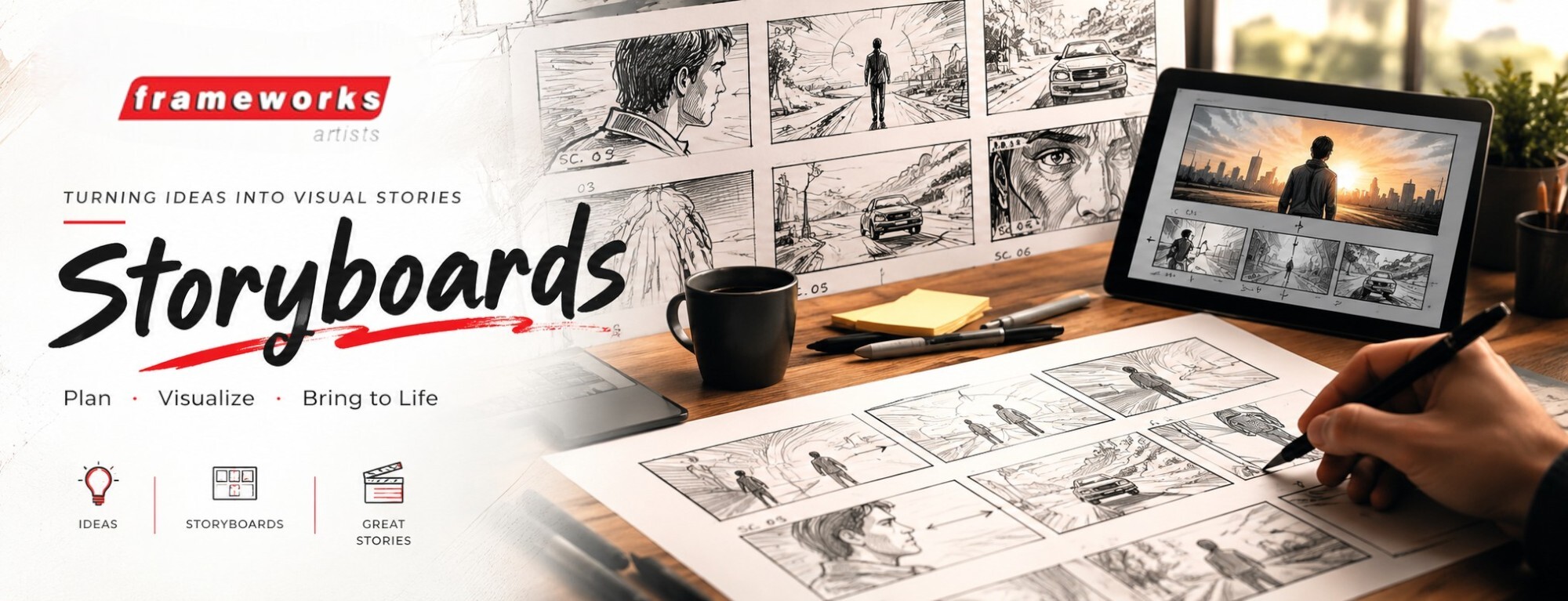
Visual storytelling begins long before cameras start rolling. Directors, producers, creative teams, and advertising professionals often need a clear visual representation of an idea before it becomes a finished production. This is where storyboards become an essential part of the creative process, transforming scripts, concepts, and directions into a sequence of images that communicates how a scene could unfold.
From camera composition and character movement to transitions and overall visual flow, a well-developed storyboard can give a production team a shared creative reference.
This blog explores how storyboarding supports pre-production, what makes effective visual planning valuable, and how professional artists can help transform an initial concept into compelling visual direction.
Storyboards Bring Creative Ideas Into Visual Focus
A script explains what happens, but visual planning helps show how it could happen on screen. Storyboards provide a visual sequence that can communicate framing, perspective, action, movement, and the relationship between different shots. These storyboards can therefore serve as an important bridge between an initial creative idea and its eventual production.
The value of storyboarding extends beyond simply creating a series of drawings. Each frame can help the creative team consider how a scene should look and feel before production resources are committed. This can make discussions more focused because everyone has a visual reference to work from.
A storyboard can be particularly useful when a project involves complicated sequences, distinctive camera angles, multiple characters, or carefully planned visual transitions. A visual sequence can also help identify potential problems with continuity or composition before filming or final production begins.
For advertising and commercial work, presentation boards can also help communicate an idea during the pitch stage. A compelling visual sequence can make a concept easier for clients and creative decision-makers to understand, especially when the finished production does not yet exist.
What Makes A Strong Storyboard Artist Stand Out
Turning a written concept into useful visual information requires more than drawing ability. A professional storyboard artist needs to understand visual communication, composition, perspective, storytelling, and the practical requirements of production. The artist must interpret creative direction while retaining the central intention of the scene.
A strong artist can also adapt to different visual requirements. Some projects may call for highly detailed presentation artwork, while others may require quick, expressive frames that communicate action and composition efficiently. The right visual treatment depends on the project’s purpose and the stage of production.
The ability to understand direction is equally important. A storyboard artist may need to interpret a script, collaborate with a director or creative team, and translate verbal instructions into a coherent sequence. This makes communication an important part of the creative process.
Consistency is also an important aspect to consider. When multiple frames represent the same sequence, characters, environments, and visual relationships should remain understandable from one frame to another. This allows the boards to function as a practical visual roadmap rather than simply a collection of attractive illustrations.
Visual Planning Helps Productions Move More Confidently
Pre-production often involves numerous creative decisions, and visual planning can help bring those decisions together. Storyboarding provides an opportunity to explore a sequence before resources are committed to filming, set construction, animation, or other production stages.
A clear visual plan can help teams discuss the intended camera language and identify how individual shots connect. It can also make complicated scenes easier to break down into manageable visual moments.
For directors and producers, this process can encourage greater clarity before production begins. For creative teams, it can provide a reference that helps maintain consistency as a project develops.
A storyboard can also be valuable when presenting an idea to clients. A concept that may be difficult to explain verbally can become much easier to understand when its major visual moments are shown sequentially.
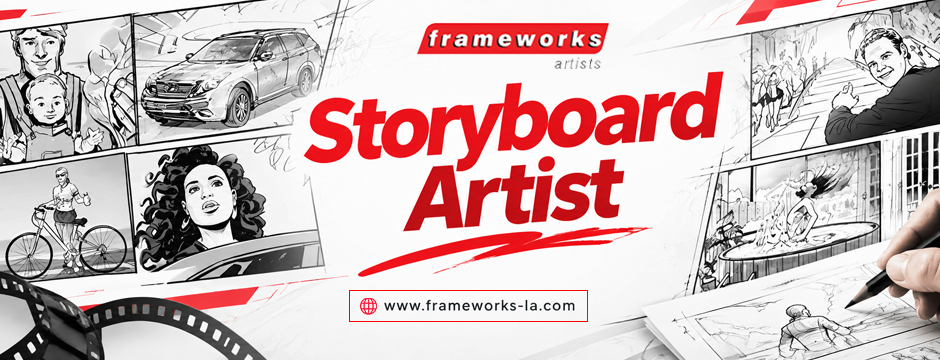
Professional Illustration Supports Different Creative Requirements
Not every project needs the same type of visual treatment. A commercial pitch may benefit from polished presentation artwork, while a production sequence may prioritize clear action and camera information. Understanding this difference allows the visual approach to be tailored to the project’s objective.
Digital artwork can offer a clean and adaptable presentation format, particularly when boards are being shared electronically or incorporated into pitch materials. Traditional approaches can provide a different visual character and may be appropriate when the project’s aesthetic or creative direction calls for it.
The choice between color and black-and-white presentation can similarly depend on the project’s needs. Color can help communicate mood, environment, wardrobe, or visual tone, while black-and-white frames can concentrate attention on composition, movement, and storytelling.
Ultimately, the strongest approach is the one that communicates the intended idea clearly. Technical polish matters, but visual clarity and storytelling purpose remain central to effective storyboard artwork.
A Dedicated Creative Resource For Storyboard Production
Frameworks Artists specializes in providing illustrators and preproduction artists for entertainment, advertising, design, and commercial production. Its artist offerings include color storyboard artists, black-and-white storyboard artists, sketch artists, comp and concept artists, and production design illustrators. The company states that its storyboard artists work on presentation, pitch, and production projects, using both digital and traditional approaches depending on the artist and project.
The studio’s broader range of visual professionals allows creative teams to consider different forms of pre-production artwork within one resource. Its services extend beyond storyboarding into concept and comp artwork, set sketching, and production design illustration.
This variety can be useful for projects where visual development evolves during the creative process. A production may begin with a broad concept, move into detailed visual planning, and eventually require additional artwork to support the production environment.
Storyboarding Can Strengthen Creative Communication
Creative projects often involve people with different responsibilities and perspectives. A director may be focused on visual storytelling, a producer on practical execution, and a client on the final audience experience. Strong storyboards can give each participant a common visual reference.
It can also help transform abstract creative language into something concrete. Instead of relying entirely on descriptions such as “wide shot,” “close-up,” or “dynamic movement,” a sequence of frames can demonstrate how those instructions are intended to work together.
This makes storyboarding valuable not only as an artistic service but also as a communication tool. When the visual intention is understood earlier, creative discussions can become more productive and project decisions can be made with greater confidence.
Wrapping Up
From advertising pitches to entertainment productions, storyboards can provide an important visual foundation for developing and communicating creative ideas. These storybaords help teams explore compositions, understand sequences, discuss camera direction, and visualize concepts before the final production takes shape.
Choosing an experienced artist can make that process more effective by bringing together drawing skill, visual storytelling, production awareness, and the ability to interpret creative direction. For teams seeking professional visual development, Frameworks Artists offers storyboard and pre-production illustration expertise across entertainment, advertising, design, and commercial projects.
With the right combination of visual planning and artistic interpretation, storyboarding can turn an idea on paper into a clearer, more compelling vision for production.
FAQs
1. What is the purpose of the storyboards in the production?
Storyboards visually map scenes, helping teams understand composition, camera direction, movement, sequencing, and overall visual flow before production.
2. What is the role of a storyboard artist?
A storyboard artist transforms scripts and creative direction into visual frames that communicate how scenes and sequences could appear on screen.
3. Why are storyboards important for advertising?
Storyboards can make advertising concepts easier to present, discuss, and evaluate before resources are committed to the final production.
4. How can a storyboard artist support pre-production?
A storyboard artist can help visualize shots, sequences, character movement, composition, and transitions, giving the production team a shared visual reference.
5. What type of organizations can create professional storyboards?
Frameworks Artists, as an artistic representative agency, provides storyboard and pre-production illustration services, including color and black-and-white storyboard artwork.
Tags: Commercial Storyboard Artist, Concept Art, Creative Production, Pre visualization, Storyboard Art, storyboard artist, Storyboard Illustration, Storyboards, Visual Storytelling